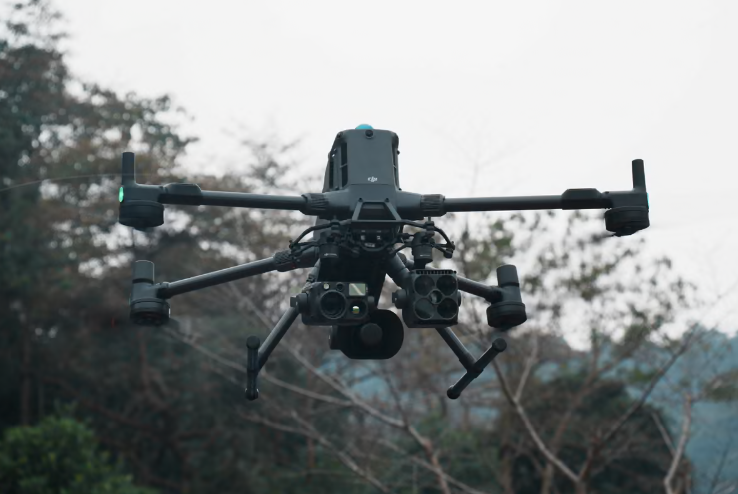
Reportedly, citing security concerns, Germany has banned the use of commercially available, Chinese-made drones at its military bases and training grounds.
Western militaries are increasingly concerned that technology manufactured in China could pose a security risk and potentially be used to transmit sensitive information to Beijing.
Germany’s drone ban takes effect immediately. This follows a move by the U.S. military to prohibit Chinese-made BYD electric vehicles from entering Kadena Air Base in Okinawa, Japan. Kadena is the largest U.S. Air Force base in East Asia and would play a direct role in responding to any crisis involving China, Russia, or North Korea.
According to a report by the German news magazine Der Spiegel, the military is moving to rapidly decommission drones that were acquired by various units in recent years without effective oversight. The Ministry of Defence has not yet commented on the matter.
Under a 2024 strategy, local commanders were permitted to purchase drones; the strategy included a “whitelist” of approved systems, which featured several models from the China-based company DJI—the world’s largest drone manufacturer.
Der Spiegel reports that, due to the absence of any central record of the drones purchased by individual units, the military has been forced to implement a blanket ban.
In February of this year, Poland banned Chinese-made vehicles from entering its military facilities, citing concerns that their onboard sensors could be used to collect sensitive data.
The military stated that Chinese-made vehicles might still be permitted to enter secure areas, provided that specific features are disabled and other safeguards—as required by the security protocols of individual facilities—are implemented.
When the U.S. military announced a ban on BYD vehicles at Kadena Air Base, U.S. Air Force spokesperson Lieutenant Colonel Allie Stormer stated: “These vehicles pose an unacceptable and unmitigable risk to our personnel and mission.”
While U.S. military officials have not specified the exact nature of the threat, the ban is part of a broader effort to limit the use of Chinese smart technology in vehicles, mobile phones, and other devices—technologies that officials fear could be used to “spy” on their owners.
In security guidance issued in September, the Dutch government noted that smart features integrated into modern vehicles—such as microphones, cameras, and GPS trackers—could be exploited by hostile nations to conduct surveillance. The warning from the Dutch General Intelligence and Security Service did not name any specific countries or manufacturers.
Previously, it was reported that last year, several British defense firms working with the UK government warned their employees against connecting or pairing their mobile phones with Chinese-made electric vehicles, amid concerns that Beijing could potentially extract sensitive data from those devices.
Last week, a group of Members of the European Parliament urged the European Commission to assess whether BYD vehicles pose a security threat and to implement restrictions against them, such as excluding them from public procurement.
In a written inquiry, 14 lawmakers have requested that the EU’s cybersecurity agency assess the threat level and potentially designate BYD as a high-risk supplier.
François Calvet, a French Member of the European Parliament who spearheaded this initiative, wrote in the preamble to his inquiry that China’s 2017 National Intelligence Law requires companies to cooperate with the state. “Therefore, allowing connected vehicles from third countries to access sensitive European infrastructure poses an unacceptable security risk,” he wrote.
In a statement, BYD asserted that any data processed or stored—whether in the cloud or within the vehicles themselves—cannot be accessed remotely from China, and that customers retain full control over their own data. “BYD Europe does not provide such data to BYD entities or third parties located in China.”
In 2018, the U.S. Department of Defense banned the use of smartphones from Chinese companies Huawei and ZTE at military bases worldwide, citing security concerns.