Automation Reliability
Grouping actions can simplify error handling, but a recovery boundary must account for work already completed inside the group.
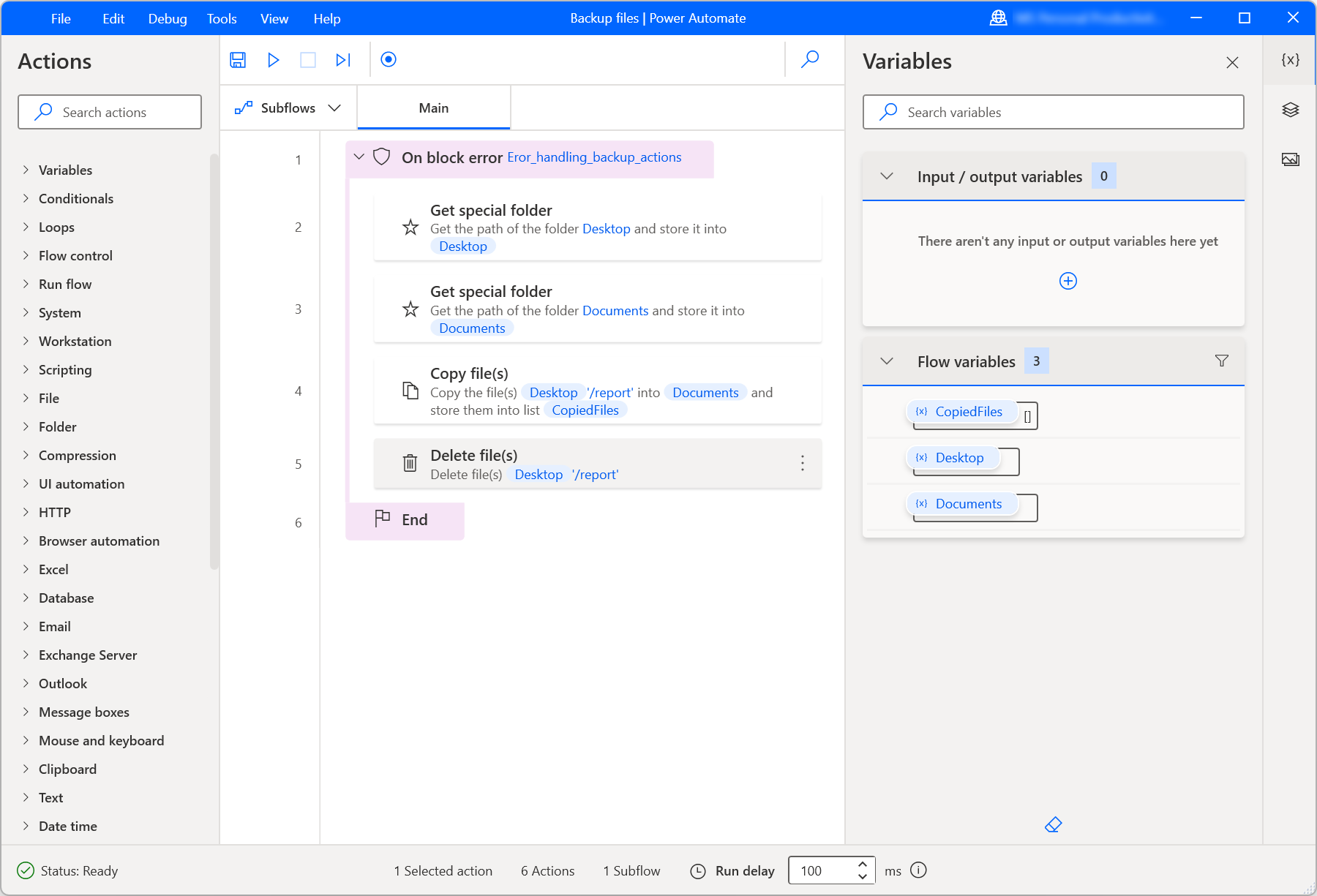
Inventory side effects in the block
List which actions merely read information and which create, update or send something. A block containing an email send is different from a block that reads a local file. Mark the point after which repeating earlier work could create a duplicate or conflict.
Understand the retry scope
Microsoft documents that retrying through On block error starts again from the beginning of the block. That matters when an early action succeeded before a later action failed. Do not assume that a block retry resumes only at the failing action.
Separate preparation from commitment
Where practical, collect and validate inputs before a step that changes another system. Keep the external effect small and identifiable. If a failure occurs after that effect, a recovery route should inspect the target state before trying again. Some operations need human review instead of automatic repetition.
Write the restart instruction
Tell the maintainer what must be checked and which part of the workflow can safely be restarted. Use sample data to test a failure at different points in the block. Record both the flow outcome and the target application’s state. Keep the instruction short enough to use during an actual interruption.
Working template
Recovery boundary review
Read-only preparation:
First external side effect:
Evidence of completion:
What can safely repeat:
What requires inspection:
Who handles an ambiguous result:
Illustrative starting point. Adapt it to your inputs, permissions and review process.
Before you use it
- All side effects are identified.
- Block retry scope is understood.
- Partial completion has a check.
- Restart instructions are usable.